The beginner's
guide
Never climbed before? Good, this is for you. Five short pitches covering what to expect, what to wear, how grades work, how to behave on the wall and what it actually costs. No gear, no partner and no experience required to start.
What to expect on day one
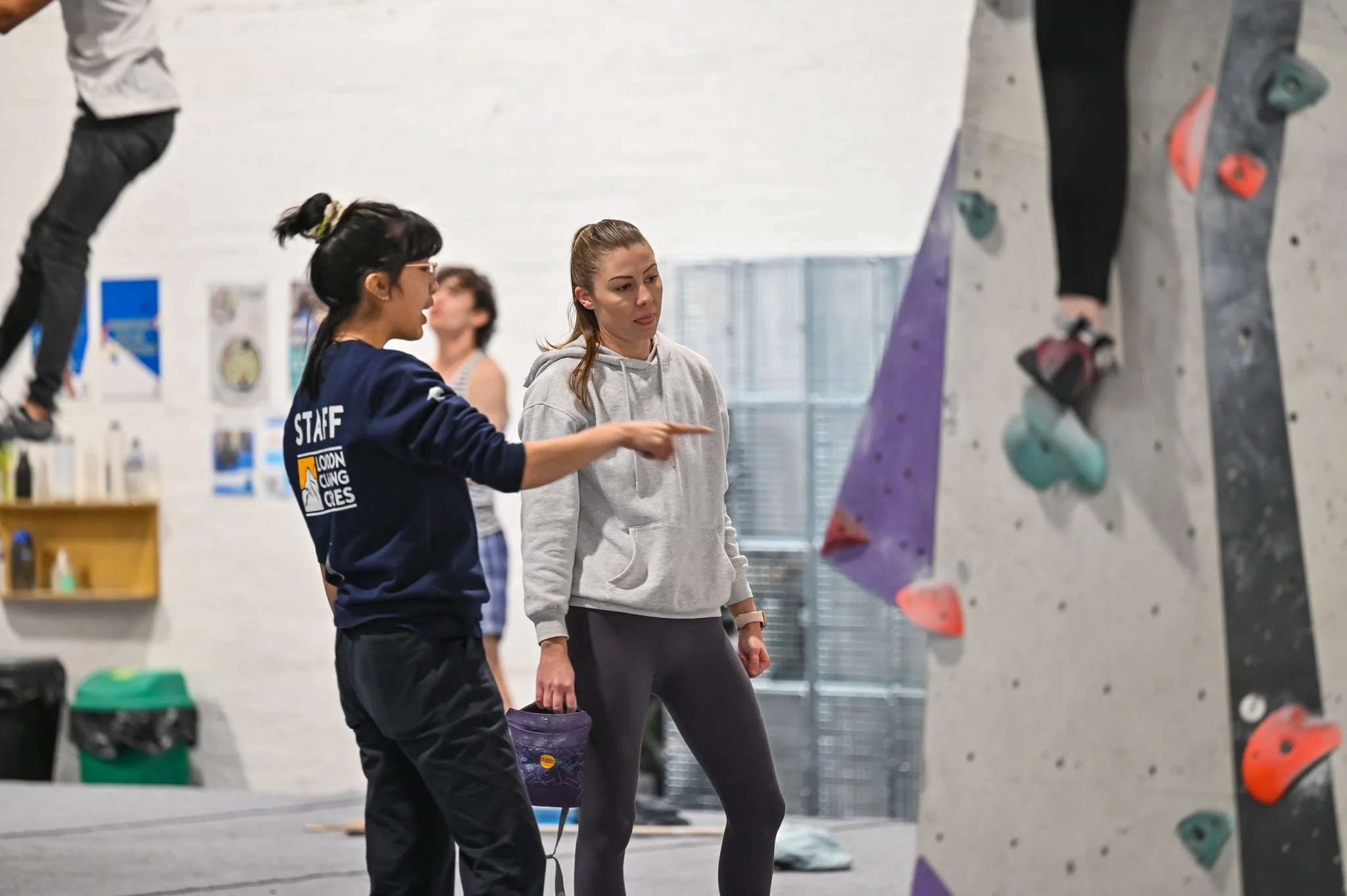
Turn up in whatever you'd wear to any gym: something stretchy you can move in, nothing so baggy it snags on holds. At the desk you'll fill in a quick waiver, then a staff member (or a short induction) walks you through the basics: how the mats work, how to fall, and how to read a problem.
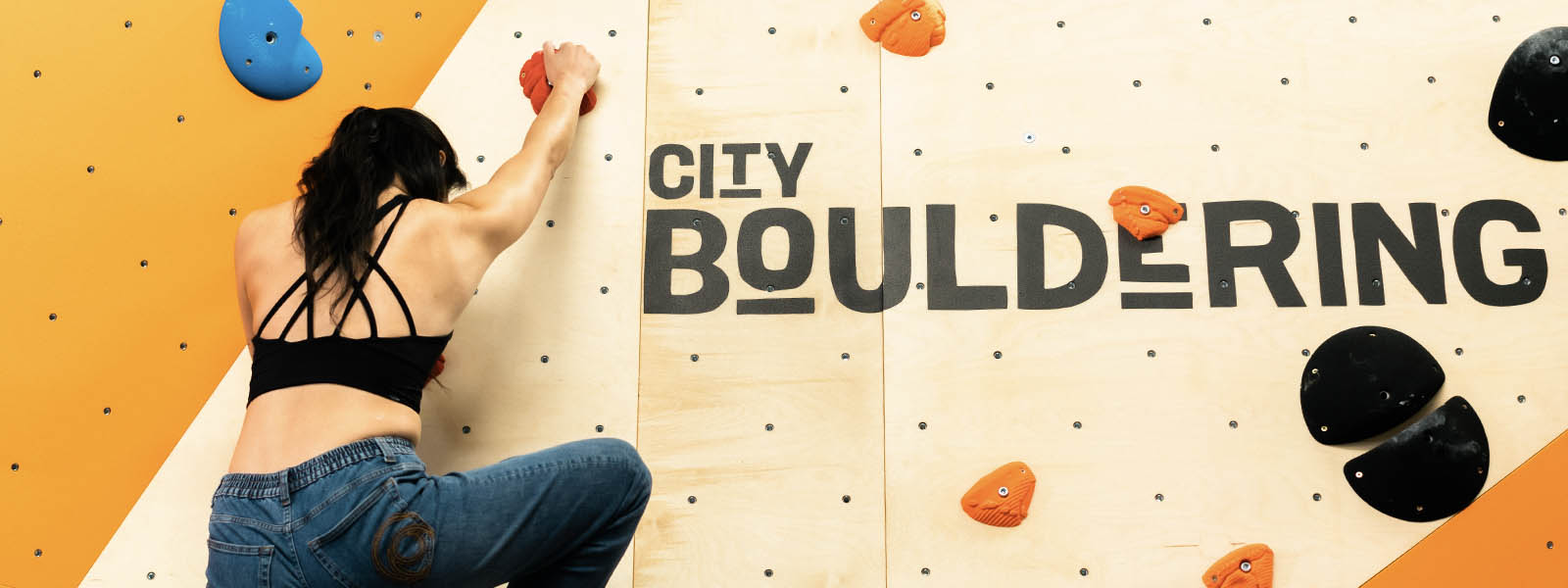
Most first sessions run about an hour and you don't need to book anything else around them. You'll spend the whole time bouldering: short, powerful problems on a wall no higher than a fire engine, over thick crash mats. No ropes, no harness and no partner required. Bring a water bottle; the gym will sort the rest.
Gear you don't need (yet)
You genuinely don't need to own anything to try climbing. Rental shoes and a chalk bag live at the front desk for a few pounds, and most gyms throw them in free for a first visit. Wear leggings or shorts and a t-shirt you don't mind getting chalky. Long hair goes up, rings and watches come off (they catch on holds), and that's the whole kit list.
If you love it, your own shoes are usually the first purchase, and even then a beginner-friendly pair costs about the same as a decent pair of trainers.
Grades, decoded
UK gyms usually grade boulder problems on the Font (Fontainebleau) scale: 4, 5, 6a, 6b and onward, climbing up the alphabet as walls get steeper and holds get smaller. Some gyms use the V-scale instead (V0 to V16), or simply colour-code problems, taping one colour to the wall per difficulty band. Roped routes, where a gym has them, are graded on the French sport scale (4a to 9a+).
None of this matters on day one. Look for the easiest colour or the lowest number on the board and start there. A grade is a rough note left by other climbers, not a test you need to pass.
Wall etiquette
- Don't stand under someone on a problem, and never walk under a wall you can't see the top of.
- One climber on a problem at a time. If someone's clearly working something, wait your turn or ask to share.
- Brush your own chalk off the holds when you're done, and reset any crash pads you've dragged out of place.
- Falling is normal (it's half the sport). Aim for the mat, land on your feet or your back, and try not to grab a stranger on the way down.
- Headphones are fine, but stay aware of the room. It gets busy on weekday evenings.
What it actually costs
A single day pass at most UK bouldering gyms runs somewhere between £12 and £20, usually including shoe hire. Memberships bring the average session down a lot if you're going regularly, typically £45 to £75 a month depending on the city and how many gyms it covers.
First-timer offers are where the real savings sit: most gyms run an intro deal (day pass, induction and gear for one flat price) built specifically for people who've never climbed before, and it's usually the cheapest way in by some distance.
First-timer offers near you
Every deal below is built for a first session, not a hard sell. Pick one and you're booked.

Booked a deal? Get the app.
The Crahg app is where you'll actually book your session, track the gyms near you and see what's on once you're hooked.
Get Crahg, free